CASE: Kustaankartano
Improving the Quality of Life of the Elderly with a Digital Solution
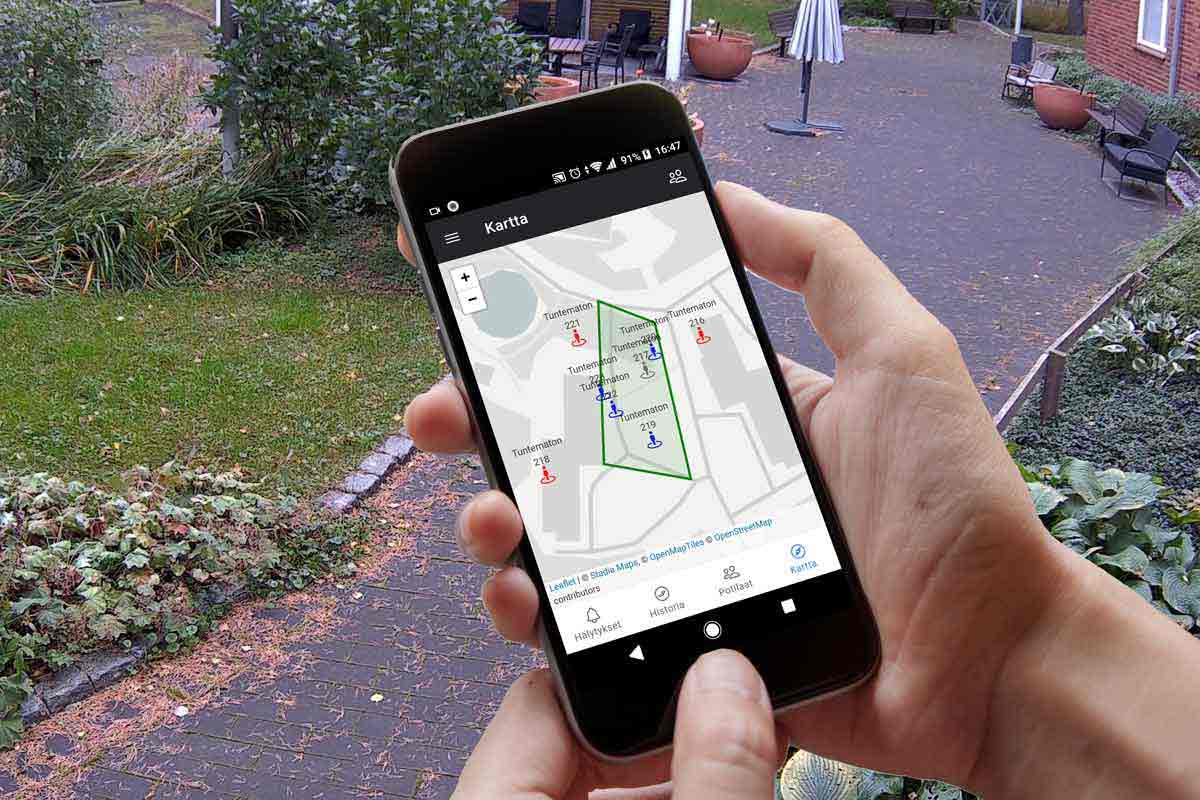
A computer vision application monitors outdoor activities of people with memory disorders and issues alerts when necessary. Automated monitoring frees up staff time for care work and increases the safety of outdoor activities. The application was piloted at the City of Helsinki’s service center in Kustaankartano.
Kustaankartano
Improving the Quality of Life of the Elderly with a Digital Solution
A computer vision application monitors outdoor activities of people with memory disorders and issues alerts when necessary. Automated monitoring frees up staff time for care work and increases the safety of outdoor activities. The application was piloted at the City of Helsinki’s service center in Kustaankartano.
Kustaankartano is a versatile service center for elderly Helsinki residents and unemployed people in Oulunkylä, Helsinki. The service center offers opportunities for sports, crafts, and supported group activities. Kustaankartano serves as a common meeting place and is also home to many elderly residents. Additionally, many elderly people living nearby regularly attend day activities at Kustaankartano.
What technologies have been tested at Kustaankartano?
The memory yard project, which started in 2019, has tested motion-sensing smart floors, social robots, person recognition, sensory rooms, smart lighting, and interactive seal robots, among others. Every experiment shares the same goal: improving residents' quality of life and freeing up staff time for care work.
The project's purpose is to free up staff time for resident care by implementing digital, robotic, and AI-related assistive tools in elderly care services. Additionally, Kustaankartano serves as a service platform in the 6Aika CoHeWe project (Co-Created Health and Wellbeing), which seeks innovative disease-preventing and wellbeing-promoting solutions together with technology companies.
Research on technology adoption in care sector has found that technology implementation often increases time pressure and may even excessively replace human interaction. However, at Kustaankartano, the experiments have been met with positive attitudes. Staff, clients, and relatives are fully involved in the experiments, and Kustaankartano has indeed earned its position as a pioneer in care technology implementation.
Why does the care sector need technology?
The care sector faces a workforce shortage of both practical nurses and registered nurses, and the situation is not expected to improve on its own. More than 18,000 practical nurses alone are retiring in the coming years, and the shortage is worsened by the gradually implemented nurse-to-patient ratios and population aging. Simply increasing the number of nurses is not a guarantee of high-quality care, so additional methods are needed, of which technology utilization is one.
In early 2019, serious problems were revealed in round-the-clock elderly care. Rush and insufficient nursing staff were contributing factors to deficiencies found in basic care. In operations focused on achieving profit targets, the most important thing, the wellbeing of those being cared for, has been forgotten.
The City of Helsinki has a self-monitoring plan for each service unit to ensure the quality of services provided. In addition to quality, self-monitoring affects workplace safety and wellbeing. The City of Helsinki has succeeded reasonably well in providing quality services. According to a customer satisfaction survey conducted with clients and relatives in 2019, the overall quality of service is at a good level, although there is still room for improvement. The poorest rating goes to individuals' influence on the course of their day.
What problem does the computer vision application solve?
In Kustaankartano's memory care unit, residents' outdoor opportunities are limited to outings accompanied by caregivers, even though their physical condition is mainly good and would enable more movement than can be offered. The City of Helsinki sought a technical solution to pilot for this challenge, and Empirica's person recognition based computer vision application was selected for testing.
The project was able to start in spring 2020. The goal is to test how person recognition and smart cameras can enable residents' independent outdoor activities. At Kustaankartano, the outdoor area is partially fenced, but despite this, outdoor activities always carry the risk of leaving the yard area. Empirica's developed computer vision application enables risk reduction and facilitates outdoor activity supervision.
Independent outdoor activities without caregiver assistance aim to increase memory care patients' own influence on outdoor times, increase outdoor time, and improve safety, thereby enhancing their quality of life. At the same time, nursing staff have more time for care work.
How does the computer vision application work?
The application recognizes outdoor falls and immediately alerts staff about them. It also defines the boundaries of the outdoor area, so if a resident were to leave the area, an alert is sent right away. In addition, the application keeps track of time spent outdoors, so that during severe cold or heat residents can be guided indoors after even a short outdoor session.
The purpose of the development work was to test Empirica's person recognition solution and algorithms and to teach them to recognize these situations reliably in a real environment.
Challenges in the project were particularly caused by tracking multiple simultaneous subjects from camera to camera and monitoring multiple simultaneous video feeds with sufficient accuracy but still efficiently. Covering the entire area required multiple cameras, and the park-like view created its own challenges for their placement.
"Tracking people is difficult when people move behind obstacles or from camera to camera, and most of the work was practically related to that. There's a long way from detecting individual images to tracking people so that people's identities don't get mixed up. Machine learning is the best solution for managing these complex situations."
Elias Yarrkov, Data Scientist, Empirica Finland
In addition to monitoring the yard area, access to the yard is monitored with smart locks so that residents can move through locked doors in and out without nursing staff help. This enables residents' free outdoor activities at times other than scheduled outdoor times.
How do elderly people react to new technology?
Although information technology is often unfamiliar to elderly people and may be viewed with apprehension, residents at Kustaankartano have been enthusiastically involved in new experiments. Usability is particularly important in digital solutions for the elderly, as older age groups have significantly less experience using digital devices than younger people. Some solutions are aimed at staff, but solutions targeted at residents and relatives have also been tested.
At best, digital solutions can help aging individuals manage their daily tasks independently for longer and thus improve their quality of life. In Kustaankartano's experiments, companies receive valuable feedback on their solutions directly from users, enabling service development in the right direction.
What does a care home gain from technology experiments?
Kustaankartano serves as a testing platform where companies get to test the functionality of their solutions in a real environment and nursing staff get to familiarize themselves with the opportunities brought by new technologies. The goal of digital solutions is to streamline daily operations, increase safety, and free up caregivers' time for resident care and attention. Technology supports the goal of meaningful aging. Read more: Technology in Elderly Care: Benefit or Burden?
Modern digital solutions need a scalable cloud platform to function seamlessly. Learn more about our Azure consulting.
Other customer stories

Is your situation similar?
Tell us what work repeats in your company and what data your systems or devices already produce. In 30 minutes we will go through whether something similar could work for you. The first conversation is free.
Arrange a 30-minute callRead about the automation assessment