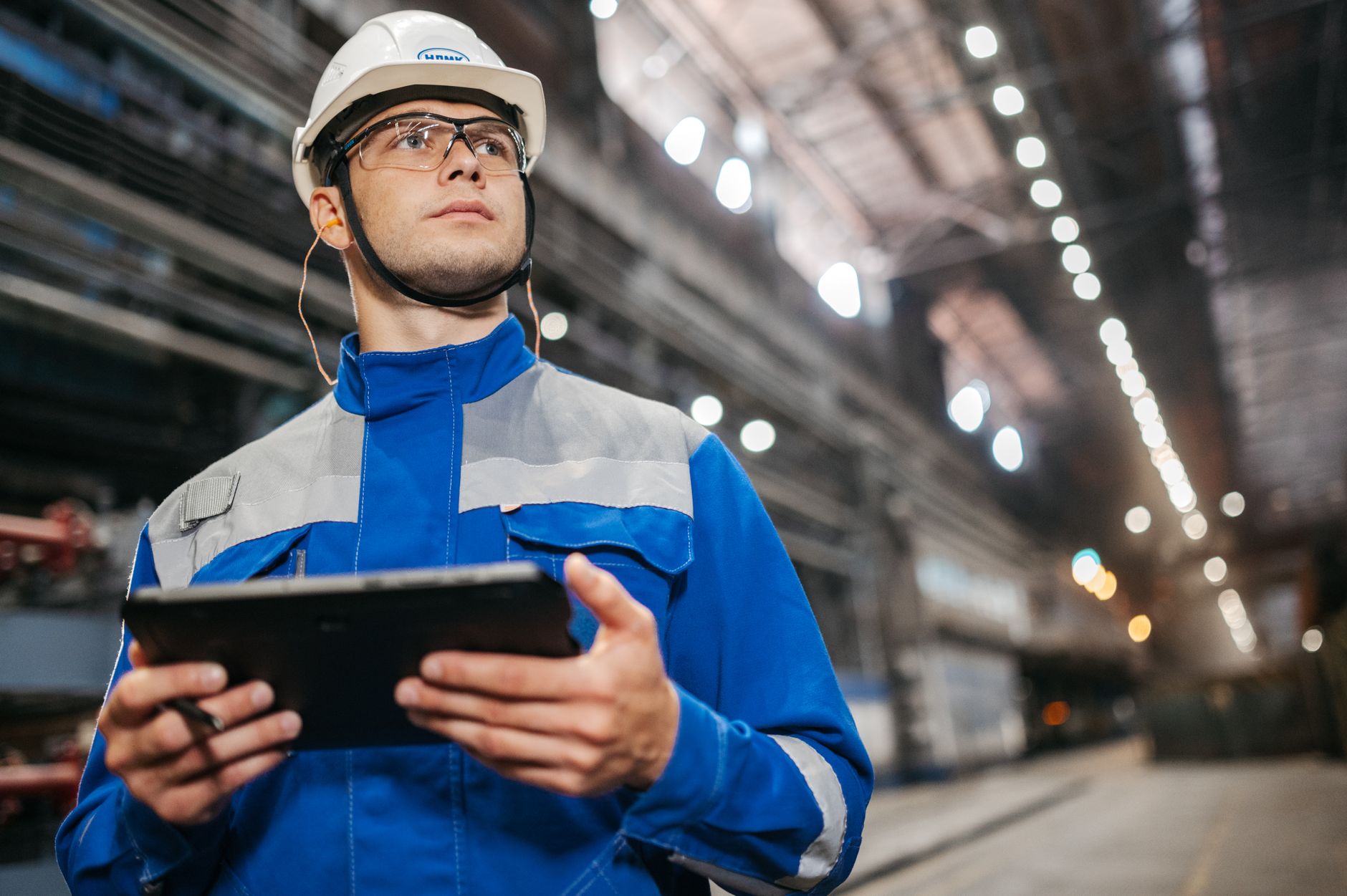
Physical AI is AI that perceives the physical world through sensors and cameras, interprets what it observes and acts on it. The term brings humanoid robots to mind, but for a small or mid-sized company the most usable part is less visible: AI that watches the data existing sensors and cameras already produce and raises an alert when something deviates. It needs no new devices.
Physical AI in brief
- Definition:
- AI that perceives, interprets and acts in the physical world through sensors, cameras and devices.
- Three layers:
- Perception (sensors and cameras), reasoning (a model interprets the observation) and action (a device moves or a person receives an alert).
- Relationship to IoT:
- IoT collects and transmits measurements. Physical AI interprets them and decides what happens next.
- What works today:
- Detecting deviations and raising alerts from sensor and image data, for example in transport conditions, animal welfare and safety in care.
- What you don't need to start:
- Robots. Robotics is a hardware investment of its own, but detection and alerting work without it.
What does physical AI mean?
Physical AI is AI that reads sensors and cameras instead of documents and business systems. It watches a warehouse, a production line or a shipment, for example, and responds to what happens there. According to NVIDIA's definition, it lets autonomous systems such as cameras, robots and self-driving cars perceive, understand, reason and perform or orchestrate complex actions in the physical world.
Two things in that definition are worth noticing. First, the definition names cameras before robots. Besides robots and cars, NVIDIA's examples include factories and warehouses where fixed cameras and computer vision monitor safety and the movement of people and goods. Second, the definition talks about performing or orchestrating actions. The AI does not have to move anything itself: it is enough that it triggers the right action.
In practice, physical AI consists of three layers:
- Perception. Sensors, cameras and the devices' own measurements produce data about the physical environment.
- Reasoning. A model interprets the data: is this a deviation, what caused it, is it urgent.
- Action. Either the device acts on its own, or a person or a system is informed and acts.
When the focus is on running the operation rather than on the device, the same territory is often described as operational AI or AI-powered operations.
How is physical AI different from IoT, robotics and automation?
Physical AI is a chain in which IoT produces the observations, AI interprets them and robotics is one possible way to act. The difference shows in who or what ultimately makes the decision.
| What it does | Where the data comes from | Who acts | Type of project | |
|---|---|---|---|---|
| IoT | Collects and transmits measurements | Sensors and devices | A person reads the values | Device and network project |
| Traditional automation | Follows a fixed rule | Systems or a single sensor | The rule, for example "if temperature exceeds the limit, alert" | Configuration |
| Physical AI: perception | Interprets a complex observation, such as an image or a combination of sensors | Sensors and cameras combined with other data | A person or system receives an alert | Data project |
| Robotics | Moves and grips physically | The robot's own sensors | The robot itself | Hardware investment and safety assessment |
The Internet of Things (IoT) is therefore a prerequisite for physical AI, not a synonym for it. IoT answers the question "what is measured", physical AI the question "what does the measurement mean and what should be done about it". The line between physical AI and traditional automation is the same as the one between an AI agent and rule-based automation: a rule is enough when the deviation is a single number and a threshold. AI is needed when the deviation has to be recognized from an image or from a combination of measurements.
What is the difference between device control and operational automation?
In device control, a device reacts to its own measurement and the decision is made inside the device. In operational automation, data from several devices and systems is combined, and the result changes someone's work step. The device supplier is responsible for the first. The second is built on top of the devices.
Device control is familiar from everyday operations: a thermostat starts a compressor, a forklift's speed limiter slows it down and a robot's collision avoidance stops its movement. Each makes its decision inside the device and works well, but sees only its own measurement.
Operational automation looks at the whole. For example, a cold store's thermostat keeps the temperature in check, but it does not notice that temperature spikes recur on Friday evening shifts and coincide with the loading door being open. That observation only emerges when temperature data is combined with door and shift data. The result does not control the compressor. It guides people: who checks the door, which batch is moved first, what changes in the evening shift's instructions.
This distinction decides who to turn to. If the problem is how the device itself behaves, the answer lies with the device supplier. If the problem is that a deviation is noticed too late or by chance, the answer lies in the data the devices already produce.
What can a mid-sized company use physical AI for today?
Today, a mid-sized company can use physical AI for detection and alerting: AI continuously monitors sensor or image data and surfaces what a person needs to react to. This requires no robot and no new devices if the data already exists. Three projects Empirica has delivered for Finnish organizations illustrate what this looks like in practice.

- Transport condition monitoring. Metsä Board's paperboard shipments travelled with sensors that measured location and conditions throughout the journey. What made the difference was combining the sensor data with damage records logged at storage points: the time and place on the route where packages broke could be pinpointed, and waste was reduced. Read how real-time transport tracking was implemented.
- Animal welfare monitoring. In the free-stall barn of Arla's pilot farm, computer vision monitors the welfare of cows with eight indicators, such as lying comfort and nutrition. Images are analyzed in the cameras and only the result is passed on. The monitoring complements the supervision done by people rather than replacing it. See how computer vision works in barn conditions.
- Outdoor safety in care. In a Helsinki city pilot, Kustaankartano's memory care unit trialled a computer vision application that detects falls and residents leaving the yard area and alerts staff. The aim was to let residents go outdoors on their own. Read about the computer vision pilot in elderly care.
What all three have in common is that the action is information or an alert to a person, and the value came from combining and interpreting data. In these projects the sensors and cameras were also chosen as part of the work, but most companies already have comparable data: surveillance cameras, machines' own sensors, access control and transport tracking devices. Image data also always raises a privacy question, and it should be settled before adoption in the same way as AI security in business use in general.
Robotics is real progress, but for a mid-sized company it is a hardware investment whose payback depends on volume and safety requirements. If the problem in a warehouse or on a production line is that deviations are noticed too late, a robot is not the answer.
Where should you start when your devices already produce data?
Start from the decision, not from the device. First, work out which deviation is noticed too late today and what it should change. You can get started by answering three questions:
- Which deviation is noticed too late or by chance? Damage found only by the customer. A fall nobody saw. A quality defect that surfaces at the end of the batch.
- What data about it already exists? A camera image, a sensor log, a machine's own measurement, a manual record.
- Who acts when the alert comes, and what do they do? If there is no answer, the alert only adds to the workload.
If all three have an answer, you are looking at a data project, not a hardware project. The targets can then be prioritized like any automation: scoring processes by frequency, scale and error-proneness works as well for sensor data as it does for system data.
If you first want a ballpark figure for what recurring checking and monitoring work costs you each year, the automation potential quick estimate answers that in about two minutes.
Are your devices already producing data nobody has time to look at?
The Automation Assessment identifies which part of your sensor, camera and system data is worth putting to work for detection and alerting first, and what it is worth in euros.
Book an Automation AssessmentEmpirica Finland is a Finnish provider of operational AI and automation that builds automations from the data produced by a company's systems as well as its devices and sensors, and is responsible for keeping those automations running. Empirica is a Claude Partner Network member and a Microsoft partner.
Sources
What are the claims in this article based on?
- What is Physical AI?
NVIDIA, published 29 September 2026
Source for the physical AI definition: autonomous systems such as cameras, robots and self-driving cars perceive, understand, reason and perform or orchestrate actions in the physical world. Examples include robots, autonomous vehicles and factories and warehouses using fixed cameras. Page checked on 29 September 2026.
These sources were last checked on 29 September 2026.