CASE: Metsä Board
Real-Time Transport Monitoring
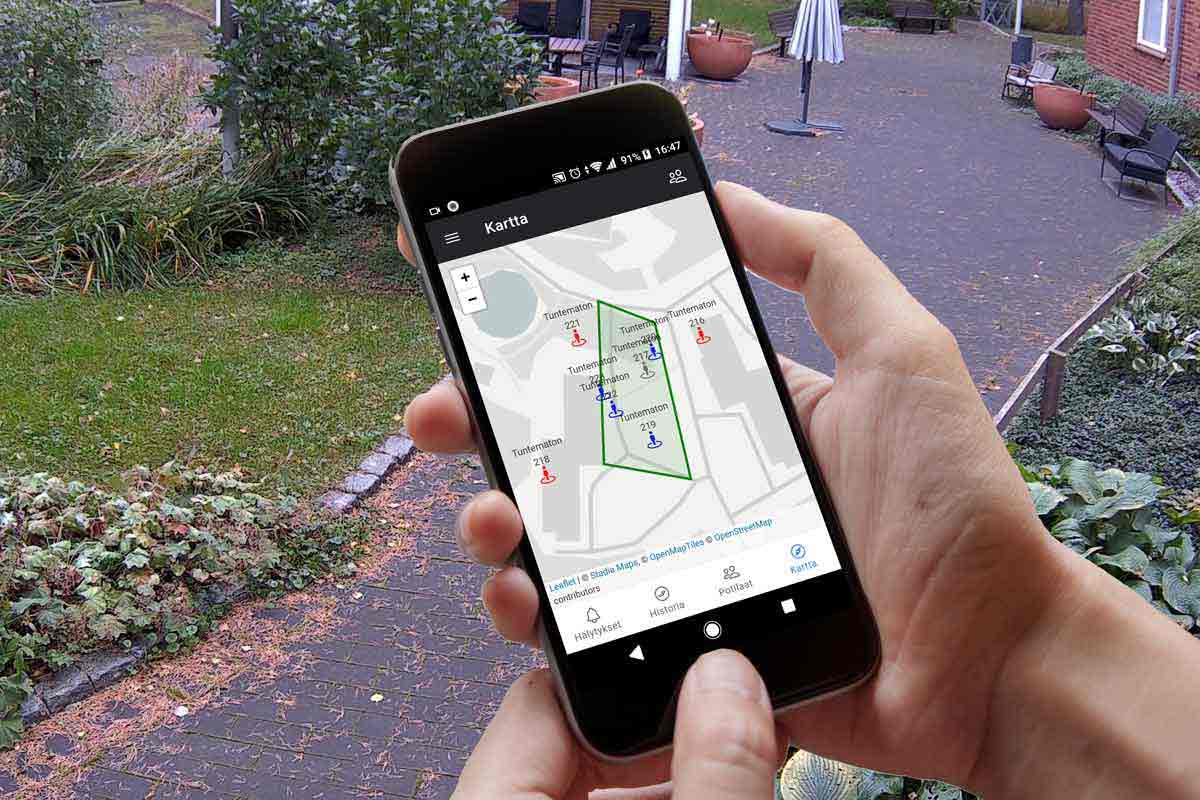
Real-time transport monitoring tracks transport conditions and shipment location. Data and analytics from monitoring sensors help reduce waste. Reduced waste lowers costs and improves customer satisfaction.
Metsä Board
Real-Time Transport Monitoring
Real-time transport monitoring tracks transport conditions and shipment location. Data and analytics from monitoring sensors help reduce waste. Reduced waste lowers costs and improves customer satisfaction.
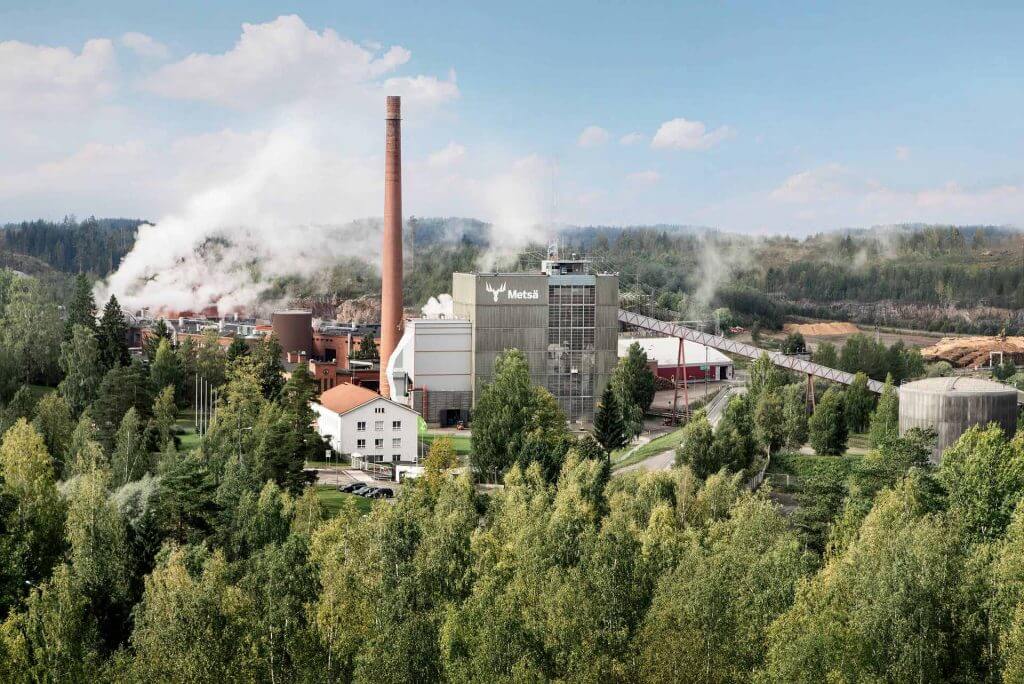
Metsä Board is a Finnish publicly listed company and a leading manufacturer of high-quality virgin fiber paperboards. The main applications for Metsä Board's products are consumer product packaging for food, cosmetics, pharmaceuticals and electronics, as well as retail display stands and shelf-ready packaging. The company actively works on developing new, more environmentally friendly packaging solutions and is a sustainability leader in its industry. Metsä Board's customers include branded product manufacturers, converters and distributors. Products are delivered to approximately one hundred different countries.
An efficient supply chain is a prerequisite for profitable business
Since products are delivered around the world, supply chain efficiency is one of the fundamental prerequisites for profitable business. In outsourced transportation, shipments pass through several different operators, and visibility across the entire supply chain diminishes. If only the information provided by transportation and warehousing companies is available, improving supply chain efficiency becomes challenging. With proprietary tracking, it is possible to collect the necessary data from shipments, which can be used to optimize the supply chain, identify bottlenecks, and recognize problem areas.
Good visibility into the supply chain is important for estimating delivery times and monitoring transportation conditions. In outsourced transportation, the customer's visibility into the supply chain is usually limited to node points such as shipment arrivals at terminals, and no information is obtained about events during transit. Delivery times in global transportation are long, and there are multiple intermediate storage points along the way. Therefore, it can be difficult to estimate real-time status and identify problem areas.
Increasing customer satisfaction
Transportation quality has a significant impact on both customer satisfaction and costs through both waste and delivery times. To achieve good customer satisfaction, it is important that deliveries arrive on time and in good condition. Although paperboard generally withstands long transportation and various transport conditions well, excessively high humidity, for example, can cause the product to become wet. For this reason, it is important that the plastics protecting the packages remain intact throughout the entire transportation.
Waste also increases costs. A shipment arriving damaged delays deliveries and causes extra work, thereby increasing costs for both the customer and the supplier. The lost value is not formed solely from the value of the spoiled product, but costs are also increased by the additional workload and the deterioration of the customer experience.
Real-time tracking with sensors
The supply chain was examined as a whole, from the production facility all the way to the customer. Reusable sensors were attached to the shipments, which allow tracking of the shipment's location as well as conditions during transport. Due to challenging transport conditions, long transport times, and the shipment handling process, the requirements for the selected sensors were resistance to high temperatures and humidity as well as long battery life. Intel's logistics sensors with replaceable batteries were selected as the sensors, which can withstand even harsh conditions. These sensors can withstand temperatures of 50 degrees for extended periods, dust, and high humidity, and their battery life is approximately 200 days.
Once the functionality of the sensors was verified, the sheet pallets were ready to travel. The sensors were attached to the sheet pallets, and conditions during transportation could immediately be monitored in real time. With the data, a good understanding of transportation routes, schedules, and conditions was quickly obtained. The data showed, among other things, the exact location of shipments with timestamps, intermediate storage times and locations, as well as changes in conditions during transport.
Freight data analytics
The primary purpose of the tracking was to improve supply chain visibility and find points where there was a risk of packages breaking, thus reducing waste. The condition of packages was checked at storage points located along the route. Any damaged packages were repaired, and the damage was recorded in the system. This provided records of the locations and times of damage. This data, together with the data collected by the sensors, already helped narrow down the possible causes of damage.
To validate the results, a more detailed analysis was conducted based on the obtained data. The system was taught to recognize the parameters that changed when the protective plastic broke. The time and location of the breakage could thus be accurately determined based on the transport conditions measured by the sensors. When the problem could be localized to a specific place and time, problems can be prevented in advance in the future. Thus, with the help of data, waste was effectively reduced and the project's benefits were quickly realized.
Artificial intelligence and data analytics
Artificial intelligence was utilized in the analysis. With the help of AI, the data analysis process was automated. This accelerated the analysis process, reduced the amount of manual work, and kept analysis costs low. Particularly in the labor-intensive data preparation phase, where raw data is transformed into a dataset, automation significantly reduces the workload required for analysis.
In addition, with the help of AI, observations were made from the data that would have easily gone unnoticed by the human eye. In real-time monitoring, sensors send values of various measurements at short intervals, and due to the large amount of data, momentary deviations easily remain hidden in simple visualization. AI is excellent for finding insights and patterns in large amounts of data. Based on patterns identified in the data, predictions can be made, future problems can be anticipated, and proactive action can be taken to eliminate problems. Proactivity promotes supply chain efficiency and reduces waste.
Real-time tracking reduces waste
With the help of Empirica's real-time shipment tracking and freight data analysis, package breakage locations were successfully pinpointed accurately, and problems could be addressed immediately.
"The collaboration with Empirica worked well, and we were able to clarify the stages of the route."
Leena Yliniemi
Product management director, Metsä Board